


Some coaches know nothing but cold. Their whole season is built across months when the wind bites and the grass crunches underfoot, and they have long since made their peace with it.
Then some coaches only encounter the real cold occasionally, where most sessions pass in bearable conditions and the truly brutal mornings come as a kind of seasonal shock to the system. Either way, cold conditions demand a different mode of thinking.
They are not an inconvenience to push through; they are a genuine challenge that, if handled poorly, can put players at risk, drain the energy from a session, and leave everyone counting down the minutes until they can get back inside.
What follows is a collection of 20 practical, field-tested tips for coaches managing training in the cold. Some of these are about logistics and planning. Others are about mindset, communication, and the small decisions that shape the feel of a session when everything around you is working against you.
None of them is theoretical. All of them matter.
—— Before You Even Arrive ——-
- 1. Decide Whether It Is Actually Safe to Go Ahead
- 2. Think Through How Journeys Might Be Affected
- 3. Reconsider Your Session Length
- 4. Check the Surface Carefully Before You Set Up
- 5. Talk to Players About Their Footwear
- 6. Encourage Players to Dress for the Cold, Not Just for Playing
- 7. Consider Indoor Space
- 8. Keep Medical Conditions handy
- 9. Think About How You Would Handle Injuries
- 10. Get Players Moving the Moment They Arrive
- 11. Warm Up Properly — and Take It Seriously
- 12. Keep Breaks Short and Intentional
- 13. Make Sure Players Are Drinking, Even in the Cold
- 14. Maximise Ball Rolling Time and Minimise Stoppages
- 15. Keep the Mood Light and the Energy Up
- 16. Check In with Your Players and Actually Listen
- 17. Give Your Goalkeepers Special Attention
- 18. Be Ready to Make Tough Calls as the Session Goes On
- 19. Manage Your Matchday Substitutes Thoughtfully
- 20. Look After Yourself
1. Decide Whether It Is Actually Safe to Go Ahead
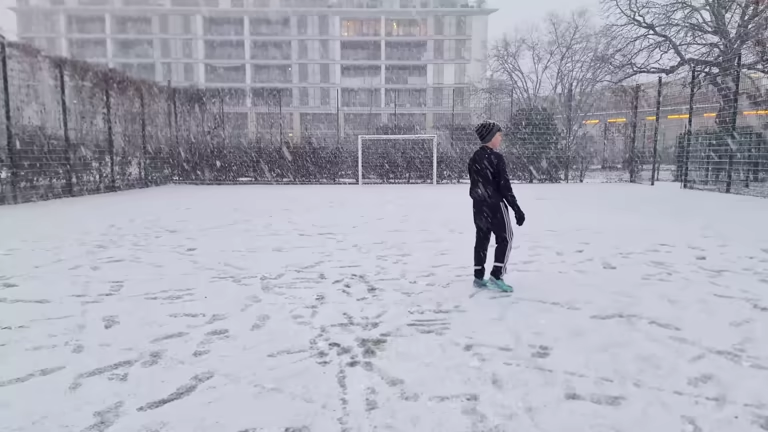
This sounds obvious, but it deserves deliberate thought before every cold-weather session, not a cursory glance out the window.
Can the session run safely?
Is the temperature so extreme that it poses a genuine risk to players?
Is the surface playable, or has frost turned the grass into something closer to concrete? Are the paths and entrance routes safe for players to walk on without slipping?
These are not hypothetical questions; they are the foundation of your risk assessment, and the answers need to come before anything else.
A session that goes ahead when it should not have is always harder to justify after the fact than one that was postponed out of caution.
The simplest question to ask yourself is whether you would be comfortable explaining your decision to a parent if something went wrong. If the answer is uncertain, lean toward calling it off.
SEE ALSO | Can You Play Soccer with a Cold?
2. Think Through How Journeys Might Be Affected
Cold weather does not just affect the pitch. It affects the roads, the buses, the trains, and the families trying to get their children to training on time.
If conditions are icy or wintry, you can expect some players to arrive late, and others to not arrive at all, particularly those coming from more rural or remote areas where conditions are often worse, and transport links are thinner.
Plan your session with that variability in mind.
Have an arrival activity ready that players can slot into as they turn up at different times, so those who arrive early are not standing around waiting, while those who are still on the road feel like they have already missed something important.
A flexible opening of 15 minutes costs you nothing and communicates to players and parents that you have thought this through.
3. Reconsider Your Session Length
A regular session might run for ninety minutes or two hours.
That duration is built around normal conditions; conditions that allow players to get warm, stay warm, and sustain their focus across a full evening of work. Cold weather changes the equation. The longer players are out there, the harder it becomes to keep them properly warm, and the more the discomfort starts to override the learning.
Shortening the session is not a failure of planning; it is intelligent management of the circumstances.
Players still get meaningful time on the ball and in the game, but you are not stretching the session past the point where the cold starts doing more harm than good.
A 60-minute session that crackles with energy and movement will always outperform a ninety-minute one where players are half-frozen and going through the motions by the end.
—— The Surface and Equipment ——-
4. Check the Surface Carefully Before You Set Up
Even if you have decided the session is safe to proceed, the surface needs its own assessment once you arrive. Frost and freezing temperatures change the character of a pitch significantly.
Grass that is normally forgiving becomes firmer and harder underfoot, which increases the physical impact of every contact. A slide tackle on frozen ground is a different proposition than the same challenge on a normal surface, and a simple fall can hurt a lot more.
Astroturf and concrete surfaces can become slippery in a way that is not always visible until someone is already on the floor.
Walk the full surface before players arrive. Note any patches that are particularly firm, slippery, or uneven, and cone them off where you can.
Knowing the surface intimately also helps you configure your session layout thoughtfully, placing activities away from the worst areas or adjusting the shape of your pitch so that the dodgiest corners are not in regular use.
SEE ALSO | 10 Best Soccer Bags With Ball Compartments for Training & Games
5. Talk to Players About Their Footwear

Footwear matters more in the cold than coaches often give it credit for, and it is an area where a quick conversation or a message to parents before the session can make a real difference.
Players who normally wear studs on grass may need to reconsider on a harder, frostbitten surface. The extra firmness can make studded boots uncomfortable and potentially unsafe, and a switch to astros or a flatter shoe is often the better call.
Players who arrive in regular sneakers on an icy surface are another issue entirely, and having that conversation in advance means fewer surprises on the night.
You do not need to be prescriptive about this, and parents generally know their children’s kit better than anyone, but a short, friendly heads-up about the surface conditions and what that might mean for footwear shows that you are paying attention to the details, and it keeps the decision in their hands with the right information to act on it.
6. Encourage Players to Dress for the Cold, Not Just for Playing
There is a particular kind of optimism that leads young players to show up in shorts and a thin top when the temperature has been hovering near zero all day.
Part of coaching in cold conditions is managing that optimism gently but firmly. Remind players and parents ahead of time: more layers are better, tracksuit bottoms over shorts where possible, and hats and gloves are not just acceptable but encouraged.
The logic of it all is straightforward; it is far easier to take a layer off once you are warmed up than it is to suffer through an entire session having not worn enough.
Consider keeping a few spare items in your kit bag for the players who inevitably turn up underprepared. Gloves, in particular, are worth having on hand — they are small, easy to carry, and hands get cold faster than most players expect, especially during stoppages and breaks. Having a spare pair to offer a player who is struggling can turn a miserable session into a manageable one, and it costs very little to be that prepared.
It is far easier to take a layer off once you are warmed up than it is to suffer through an entire session having not worn enough.
7. Consider Indoor Space
Not every venue has this option, but if yours does, think about how you might use it.
An indoor area does not have to replace the outdoor session entirely; it can serve as a complement to it in ways that are genuinely useful.
You might use it for your warm-up, getting blood moving before heading outside, or for a tactical or conceptual conversation you would normally have pitch-side, where players can listen and engage without the cold chewing away at their attention.
Some of the most effective cold-weather sessions are structured around a split, a period inside doing something cognitive or technical in a contained space, and then a period outside applying that thinking in a live practice or game.
Players arrive having already had a chance to think through what they are working on, so the outside time is focused and purposeful, and the movement keeps them warm from the moment they step out.
SEE ALSO | 10 Free Kick Mannequins for Soccer Practice & Training Drills
—— Looking After Your Players ——-
8. Keep Medical Conditions handy
Cold air is a known trigger for respiratory conditions, and asthma in particular is common enough among young players that most coaches will have at least one or two players dealing with it at any given time.
Cold temperatures cause the airways to constrict, which makes breathing harder, and that effect is compounded by the physical demands of training.
Before a cold session, it is worth checking in with any players who have relevant medical conditions and asking them directly how they expect to be affected and what they might need.
This is not about building anxiety or making a production of it; it is simply about having the right information so that you are not caught off guard if a player needs to step back or slow down.
Make sure those players have their inhalers or any other relevant medication accessible, and brief another adult, if one is present, on what to watch for and what to do.
9. Think About How You Would Handle Injuries
Cold weather changes the nature of physical contact in a way that is easy to underestimate until it happens.
A ball travelling at pace into someone’s thigh or face stings considerably more when the temperature is low, and players who would normally shake something off and continue may find themselves needing a moment to recover. A harder surface means falls land differently, and the kind of minor knock that barely registers in August can be genuinely painful in January.
Beyond the minor stuff, think through how you would manage a more significant injury, one that requires the session to stop or that needs real medical attention.
Do you have a blanket with you to keep a player warm while you wait for help or while a parent is called? Is your first aid kit stocked and accessible?
These things should be for every session, but in the cold, the stakes are slightly higher, and the margin for delay is slightly thinner.
—— Running the Session ——
10. Get Players Moving the Moment They Arrive
Standing around in the cold while waiting for the rest of the group to show up is one of the quickest ways to sap the energy from a session before it has even started.
Have an arrival activity already set up before the first player walks through the gate, something simple and self-explanatory, where a player can join in as soon as they get there without needing to be briefed or organised.
A small rondo, a possession game, a technical warm-up exercise with a whiteboard explanation of the rules: the specifics matter less than the principle, which is that movement should begin immediately.
As players arrive, direct them straight to the activity rather than gathering them in a group first. This keeps things informal and flowing, reduces the time anyone spends standing still, and creates a sense of energy from the very start of the session that is much harder to generate if you let the cold settle in during the opening minutes.
11. Warm Up Properly — and Take It Seriously

In normal conditions, a structured warm-up is good practice.
In the cold, it is non-negotiable. The risk of muscular injury rises significantly when players go from cold and static to high-intensity activity without adequate preparation, and tight, unprepared muscles in freezing weather are far more vulnerable to strains and tears than they would be on a mild evening.
A dynamic warm-up, one that incorporates movement, mobility, and a progressive increase in intensity rather than simply holding static stretches, does the job properly.
The goal is to raise the heart rate, increase blood flow to the working muscles, and get the joints moving through their full range before anyone starts working at a pace. Ten minutes done well here will save you from injury later in the session.
12. Keep Breaks Short and Intentional
Breaks are still necessary in cold-weather training; players need to recover and hydrate just as they do in any other session, but the nature of cold weather means that a break that runs too long stops being restorative and starts being counterproductive.
Players cool down quickly when they stop moving, and once the cold has set back in it takes time and effort to get the warmth back. The longer the break, the more of your session you will spend trying to re-warm players rather than actually working.
Be deliberate and firm about break duration.
Players will naturally drift toward extending them, especially if they are comfortable chatting or have started to feel the cold less acutely now that they are not running. That is fine, keep the communication light, but have a clear plan for when the break ends and transition back to activity with confidence and purpose.
SEE ALSO | Getting Back in Shape for Soccer: Training Tips That Work
13. Make Sure Players Are Drinking, Even in the Cold
This is a detail that catches coaches and players out more often than it should. When it is cold, the instinct to drink fades, the body does not signal thirst in the same way it does in heat, and sipping cold water when you are already cold feels deeply unappealing.
Physical exertion generates fluid loss regardless of the temperature, and players who are not drinking are not performing or recovering at their best.
Build drink breaks into the session structure and prompt players to take them even when they say they do not need to. If your venue allows it, warm water or a hot drink can make this considerably more appealing.
The habit of hydrating in cold conditions is one that young players in particular need to be actively encouraged to develop, and the session is an ideal moment to reinforce it.
14. Maximise Ball Rolling Time and Minimise Stoppages
There is rarely a compelling reason for line drills at any time of year in modern coaching. In the cold, there is genuinely no reason for them at all; a line of players waiting for their turn is a line of players getting cold, getting bored, and disengaging from the work.
The whole structure of cold-weather training should tilt heavily toward activities that keep everyone moving as much of the time as possible.
Small-sided games, possession exercises, and formats where players are constantly involved are your friends here. When you do need to stop the session to make a coaching point, keep it concise and purposeful, say what needs to be said, demonstrate if necessary, and get back to the activity quickly.
Extended technical discussions pitched-side in sub-zero temperatures do not land well with anyone, and the quality of listening drops sharply the longer players are standing still.
A line of players waiting for their turn is a line of players getting cold, getting bored, and disengaging from the work.
SEE ALSO | 5 Ways to Make Your Training Sessions More Competitive and Effective
15. Keep the Mood Light and the Energy Up
When players are cold and uncomfortable, they are already fighting against the conditions in a way that drains their emotional reserves. The last thing they need on top of that is a coach who is heavy, serious, or given to long monologues about what the team is getting wrong.
Cold-weather sessions ask something extra of players just by virtue of existing, and the best coaches acknowledge that implicitly through the energy they bring.
Keeping things fun is not about lowering the standard or abandoning the work; it is about creating an atmosphere where players feel positive enough to engage with the challenge in front of them.
A joke, a bit of competitive energy in a small-sided game, a word of genuine praise: these things cost nothing, and they matter more in the cold than in any other context, because they are working against the emotional drag that the conditions naturally create.
16. Check In with Your Players and Actually Listen
Ask players how they are doing during the session. Are they warming up? Are they comfortable? Are they struggling with the cold in a way that is affecting how they feel?
These questions take seconds to ask and signal to players that their experience of the session matters to you, not just what they produce on the ball.
The other side of this, and it matters, is that you actually listen to the answers. Players are notorious for moaning about minor discomforts, and coaches who have been at this for a while can develop a kind of selective deafness to complaints that allows genuinely important signals to get lost.
Cold-weather sessions require a more active kind of listening: taking seriously when a player says they are not warming up, or that they are feeling the cold differently than usual, rather than assuming it is just noise. Sometimes it is just noise.
But sometimes it is not, and knowing the difference is part of the job.
—— Specific Situations ——
17. Give Your Goalkeepers Special Attention
The physiology of goalkeeping and the demands of the cold are a difficult combination. An outfield player in a small-sided game is almost constantly moving, and the physical activity of running, turning, and competing keeps the warmth in.
A goalkeeper in a large goal, watching a practice unfold at the other end of the pitch, is not getting nearly enough of that. The cold sets in faster and deeper for keepers than for anyone else in a typical training session, and a goalkeeper who has been standing in goal for an extended period is not only uncomfortable, but they are also at greater risk of injury when called upon to dive or react explosively on a hard surface.
The solution is straightforward: integrate your goalkeepers into outfield activities wherever you can, which is good coaching practice year-round and particularly important in the cold.
When they are in goal, encourage them to keep moving small feet, stay active, and not simply wait for the action to come to them.
And if the ground is especially hard, be sensible about how much full diving you are asking of them; the impact of hitting a frozen surface repeatedly is not trivial, and there is no need to expose keepers to unnecessary injury risk just to replicate a game environment.
18. Be Ready to Make Tough Calls as the Session Goes On
Conditions change during a session. A surface that was firm but manageable at the start of the evening can become significantly harder as the temperature continues to drop. A night that was cold but bearable at kickoff can turn properly hostile by the time you are an hour in.
The assessment you made before the session does not automatically hold for the full duration of it, and part of your job is to keep evaluating as things evolve.
If the conditions deteriorate to a point where you feel the risk has changed materially, do not hesitate to call the session early. Players will often protest; something is compelling about being out there in the cold together that makes people reluctant to stop, but their enthusiasm is not the determining factor here.
Yours is. Brief parents in advance that an early finish is a possibility in cold conditions and encourage them to stay close or be reachable, while also having a plan for any players who cannot be collected immediately.
SEE ALSO | Why Children Want to Play Soccer
19. Manage Your Matchday Substitutes Thoughtfully
Most of the principles above apply directly to matchdays as well as training sessions, but matchdays bring an additional challenge that training does not: substitutes.
A player on the bench in a cold-weather game is in a similar position to that goalkeeper standing in a large goal, they are not generating the heat that comes from playing, and the cold finds them quickly. Managing that is part of matchday planning.
Think carefully about how many players you take to a cold-weather game. Large squads mean large numbers sitting around, and that is difficult to manage well.
When players are on the bench, keep them active, encourage them to move, jog the touchline, and stay engaged with the game physically as well as mentally.
Have a clear plan for rotating players to manage game time and keep them warmer, and make sure those coming off the pitch have something to put on immediately rather than standing in sweaty kit as the cold arrives.
20. Look After Yourself
This one comes last, but it is not an afterthought. A coach who is cold is a coach whose attention is divided, whose patience is shorter, and whose ability to read the session and respond to what is happening in front of them is genuinely compromised.
Your comfort is not a luxury; it is a precondition for doing the job well.
Layer up properly: a good base layer, a mid-layer, a proper coat, a hat, gloves, and a snood at a minimum. Some coaches carry heat packs in their pockets, which is entirely sensible, and bringing a flask of something warm to sip on during the session is not indulgent; it is practical.
When the session ends, do not linger in the cold. Get into your car, get the heating on, and have warm clothes ready for when you get home. The players go home to warmth; you should, too.
A coach who is cold is a coach whose attention is divided and whose ability to read the session is genuinely compromised.


