


The Premier League sells itself as the richest and most glamorous football competition on earth, although beneath the lights, fireworks, designer scarves, and polished marketing campaigns sits one of football’s most ruthless industries, where managers are often treated like expensive furniture bought on impulse before being dumped beside the roadside once the shine disappears.
Money has never protected managers from humiliation in England. In fact, the bigger the budget, the colder the dismissal usually becomes. Billionaire owners speak endlessly about long-term visions, football structures, and ambitious projects, although many begin reaching for severance calculators after three poor results and one awkward post-match interview.
Some clubs burn through managers like impatient gamblers tearing losing betting slips. Others quietly waste fortunes cleaning up executive panic after handing contracts to coaches who never truly fit the dressing room, recruitment strategy, or culture of the club in the first place.
Over the past two decades, Premier League clubs have spent staggering amounts paying managers to leave, with compensation packages becoming almost as expensive as transfer fees. These payouts include terminated contracts, backroom staff exits, legal settlements, and expensive negotiations that often reveal how badly clubs misjudged appointments from the beginning.
Chelsea sits comfortably at the top of this list, which surprises absolutely nobody familiar with Roman Abramovich’s old football regime, where winning trophies bought temporary survival rather than security. Tottenham appear high after years of expensive experiments dressed up as strategic rebuilding, while Manchester United’s growing figure perfectly captures the chaos of the post-Sir Alex Ferguson era, where every new manager arrived carrying promises of restoration before eventually becoming another costly mistake.
This is the ranking of the Premier League clubs that have spent the most money dismissing managers, and in several cases, these numbers expose years of confusion far more than ambition.
1. Chelsea – £161.6m

Chelsea’s relationship with managers has always resembled a luxury hotel changing pianists every weekend while pretending the atmosphere remains stable. Success came frequently, although stability rarely entered the conversation.
Under Abramovich, Chelsea built an empire fuelled by impatience. Managers were hired to win immediately, entertain instantly, and somehow survive the impossible standards surrounding Stamford Bridge. The moment performances dipped or dressing room tensions surfaced, the axe followed quickly, no matter the manager’s reputation or recent achievements.
Antonio Conte remains one of the most expensive managerial exits in Premier League history, costing Chelsea roughly £26 million after a bitter split that dragged through legal disputes and internal resentment. Conte delivered a Premier League title and an FA Cup, although Chelsea’s hierarchy still found a way to turn the relationship toxic within months. That era perfectly captured the club’s addiction to conflict. Winning never guaranteed peace.
SEE ALSO | 10 Worst Chelsea Managers In History
Graham Potter’s payout, estimated at around £13 million, became another brutal symbol of Chelsea’s modern confusion under the Clearlake Capital era. Potter arrived carrying the image of a progressive tactical thinker after impressive work at Brighton, although Stamford Bridge swallowed him whole before he could properly establish authority.
Chelsea handed him a long contract, spent absurd money on transfers, then looked shocked when a bloated squad with no balance failed to function coherently.
José Mourinho also contributed heavily to Chelsea’s overall figure through two separate departures. His second spell collapsed under the weight of dressing room fractures, defensive football, and public arguments that eventually exhausted even supporters who once adored him like royalty.
Chelsea’s spending on managerial sackings reflects more than impatience. It reflects a football club permanently addicted to emergency solutions. Every crisis demanded another expensive reset. Every failed rebuild required another compensation package. Every short-term gamble created another long-term financial scar.
The frightening part involves how normal this became at Stamford Bridge. Chelsea spent fortunes dismissing managers while still winning trophies, which somehow convinced ownership that chaos itself represented a sustainable football strategy.
SEE ALSO | 10 Premier League’s Worst Defenders Ever
2. Tottenham Hotspur – £66.5m

Tottenham spent years presenting themselves as the sensible club among England’s elite, although their managerial spending tells a different story entirely. Behind the polished stadium tours and carefully crafted public image sits a club repeatedly paying large sums to correct leadership decisions that never truly matched their football identity.
José Mourinho’s dismissal reportedly cost Spurs around £16 million, which became even more painful considering the timing arrived days before a cup final. Tottenham hired Mourinho, hoping his serial winning mentality would finally end decades of near misses, although the partnership quickly exposed cultural contradictions.
Spurs wanted attacking football, long-term development, and emotional connection with supporters. Mourinho arrived demanding control, pragmatism, and experienced players built for immediate results. The relationship always felt like forcing two people into a marriage after ignoring every warning sign during the engagement.
Nuno Espírito Santo barely lasted long enough for supporters to finish learning his tactical plans before Tottenham moved again. His appointment already felt underwhelming from the beginning, largely because the Spurs spent months chasing higher-profile candidates before settling on him through sheer exhaustion. The atmosphere around his tenure carried the energy of a compromise nobody fully believed in.
Ange Postecoglou’s inclusion among key contributors feels particularly harsh considering how quickly supporters embraced his football initially. Angeball restored excitement, courage, and attacking intent after years of sterile football, although the Premier League eventually punished Tottenham’s defensive openness with brutal consistency. When injuries mounted and results dipped, the same board that praised bravery suddenly looked uncomfortable with the risks attached to it.
Tottenham’s managerial spending reflects a club trapped between identities. One season, they chase glamorous football. Next they demand ruthless pragmatism. Then comes another rebuild focused on youth, before panic eventually drags them back toward experienced short-term fixes.
Daniel Levy has often been praised for financial discipline, although Tottenham’s managerial history reveals expensive indecision hiding beneath the careful accounting. The club consistently hesitates between becoming an elite winning machine and remaining an entertaining nearly club. Those contradictions usually end with another manager collecting compensation while Tottenham begin explaining another fresh project.
SEE ALSO | Top Candidates for Premier League Player of the Year 2025/26 Ranked
3. Manchester United – £62.03m

Manchester United’s managerial payouts tell the story of a football giant desperately searching for its lost identity after Sir Alex Ferguson departed and left behind a throne nobody could properly inherit.
Every appointment since Ferguson has arrived carrying impossible expectations, although the club’s leadership repeatedly made matters worse through confused recruitment, executive instability, and emotional decision making disguised as strategic planning.
José Mourinho’s departure cost around £19.6 million and symbolised the breakdown of another high-profile relationship. Mourinho initially delivered trophies and restored a degree of competitiveness, although his football gradually became joyless and confrontational. Public criticism of players intensified. Dressing room relationships deteriorated. The atmosphere around Old Trafford turned heavy and exhausted.
Erik ten Hag’s payout reportedly reached £10.4 million after a reign filled with contradictions. He won trophies, dealt with ownership uncertainty, and tried imposing discipline, although inconsistent recruitment and tactical confusion prevented sustained progress. Some supporters defended him fiercely, while others saw a manager overwhelmed by the scale of the club.
Then came Ruben Amorim, whose dismissal in the 2025/26 season pushed United’s total even higher after the club once again chased the latest fashionable tactical coach without properly considering whether the environment could support his ideas. Amorim’s success at Sporting CP created enormous excitement, although English football exposed how difficult it is to implement structured tactical systems inside a dysfunctional institution.
Manchester United’s real problem never involved individual managers alone. The club spent years acting like a commercial empire, pretending to operate as a football institution. Executive confusion infected recruitment. Signings often reflected marketing appeal more than tactical necessity. Managers inherited mismatched squads assembled for previous coaches with completely different football philosophies.
Old Trafford became a graveyard for reputations. Managers arrived carrying authority and left looking emotionally drained, publicly bruised, and financially compensated for enduring the chaos.
The saddest part involves how predictable the cycle became. United appoint a manager. Supporters celebrate the cultural reset. Expensive signings follow. Internal politics emerge. Results collapse. Executives panic. Another payoff arrives. Another rebuilding speech begins.
For a club that once represented footballing certainty, Manchester United have spent a remarkable amount of money funding uncertainty.
4. Liverpool – £50.8m
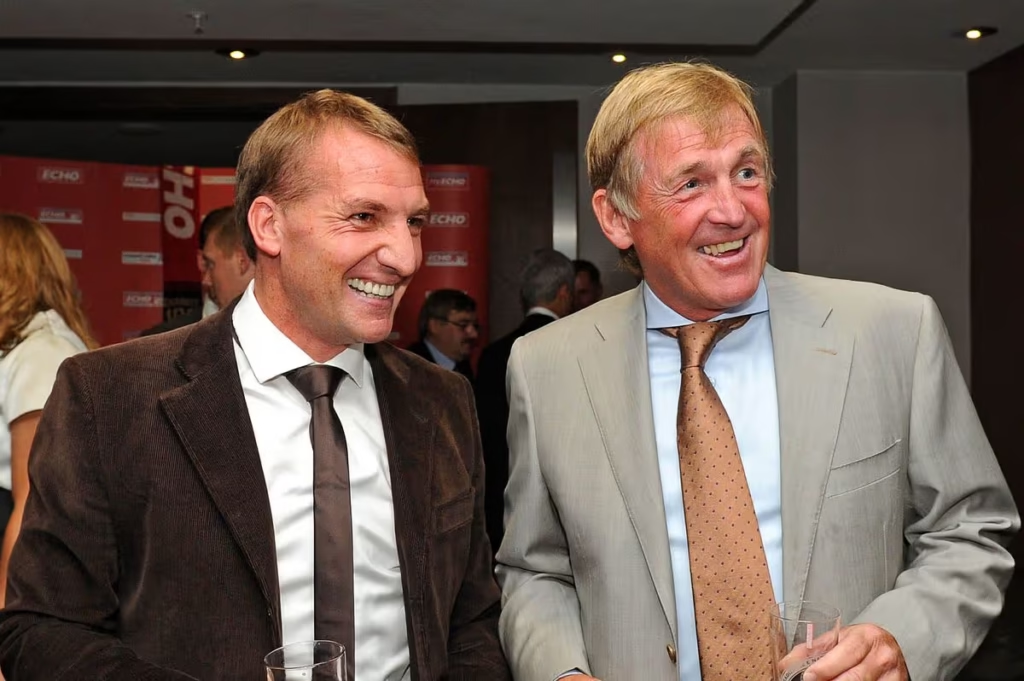
Liverpool’s place on this list feels unusual because the club generally projects patience and structural clarity better than most Premier League rivals. Their overall payout figure mainly reflects expensive exits from earlier eras before the club rediscovered stability under Jürgen Klopp.
Brendan Rodgers accounted for approximately £15.6 million after his dismissal in 2015. Rodgers nearly delivered Liverpool’s first Premier League title during the unforgettable 2013/14 season, although the collapse that followed exposed defensive weaknesses and recruitment failures that ultimately damaged his credibility.
Liverpool’s transfer business during that period often looked scattered and strangely disconnected from Rodgers’ tactical needs. Several expensive signings struggled badly, while the departure of Luis Suárez removed the attacking brilliance, covering deeper flaws within the squad.
Kenny Dalglish’s exit also contributed significantly to Liverpool’s managerial spending. Dalglish remains beloved at Anfield for reasons extending far beyond football, although sentiment eventually collided with results after an underwhelming league campaign and costly transfer decisions.
Unlike Chelsea or Manchester United, Liverpool eventually escaped the managerial carousel by fully committing to Klopp and constructing a football structure aligned with his methods. That stability transformed the club completely. Recruitment improved dramatically. Players developed coherently. The atmosphere around Anfield regained belief and direction.
Liverpool’s earlier payouts now feel like expensive lessons learned rather than symptoms of permanent dysfunction. The club recognised that constant resets rarely build sustainable success. Owners stopped chasing quick fixes and instead invested in long-term alignment between manager, recruitment department, and club culture.
That patience delivered Premier League and Champions League glory while many rivals continued wasting fortunes on compensation packages and failed rebuilds.
Liverpool’s inclusion here serves as proof that even well-run clubs can drift into confusion when identity becomes unclear. The difference lies in whether lessons are eventually absorbed or endlessly repeated.
5. Arsenal – £29.3m

Arsenal’s relatively modest figure compared to rivals reflects a club historically associated with patience, especially during Arsène Wenger’s legendary reign, although even they eventually discovered how emotionally and financially difficult managerial transitions can become.
Wenger’s departure involved significant restructuring costs linked to backroom staff and operational changes after more than two decades of near total influence. Replacing Wenger never represented a simple managerial switch. Arsenal were effectively dismantling an entire football ecosystem built around one man’s philosophy and authority.
Unai Emery later arrived tasked with modernising Arsenal while handling impossible comparisons to Wenger’s legacy. Emery achieved respectable results initially, although communication issues, tactical inconsistency, and declining confidence eventually consumed his reign.
Arsenal supporters grew increasingly frustrated watching their club drift away from elite contention while rivals accelerated financially and tactically. The atmosphere became tense and emotionally fractured. Emery often looked isolated rather than fully supported.
The crucial difference between Arsenal and several rivals involved their eventual commitment to a long term rebuild under Mikel Arteta. Early struggles triggered enormous criticism, although Arsenal resisted the temptation to restart the cycle again. That patience gradually rebuilt the club’s culture, identity, and competitiveness.
Arsenal’s payout figure could have become far uglier had ownership followed the same reactive path as Chelsea or Tottenham. Instead, they accepted short term pain while building structural stability around a clear football vision.
For years, Arsenal were mocked as overly sentimental and cautious, although modern football increasingly shows that endless panic usually costs far more than temporary patience.
SEE ALSO | 10 Football Managers With the Most Signings in History
6. Manchester City – £24.25m

Manchester City’s relatively low figure compared to their wealth reveals how dramatically Pep Guardiola’s era stabilised the club after earlier years filled with aggressive experimentation.
Before Guardiola transformed City into a relentless machine, the club experienced several expensive managerial transitions while attempting to accelerate toward elite European status. Mark Hughes and Roberto Mancini both contributed significantly to the payout total during that ambitious early phase.
Mancini delivered Manchester City’s first Premier League title in dramatic fashion, although internal tensions with executives and players eventually damaged the relationship beyond repair. His dismissal arrived only one year after championship celebrations, which perfectly illustrated football’s brutal lack of sentiment at the highest level.
Everything changed once Guardiola arrived.
Since then, City’s managerial spending has remained remarkably controlled because success removed the need for constant upheaval. Guardiola delivered trophies with such relentless consistency that the club’s sacking budget effectively gathered dust while rivals continued burning money through failed experiments.
City’s football structure also deserves enormous credit. Recruitment, coaching philosophy, academy development, and executive leadership aligned seamlessly around Guardiola’s methods. Players fit the system. Executives trusted the process. Internal panic rarely surfaced publicly.
Critics often attack Manchester City for their financial power, although their managerial stability exposes something many wealthy clubs still fail to understand. Money alone solves nothing without organisational clarity.
Several clubs spend fortunes chasing success through constant disruption. City built dominance through continuity, structure, and ruthless competence. The difference becomes painfully obvious when comparing their payout figures against clubs trapped in endless cycles of emotional decision making.
7. Everton – £21.5m
Everton’s place on this list perfectly captures the chaos of a football club that spent years acting like an ambitious giant while repeatedly stumbling into self inflicted crises.
Ronald Koeman, Sam Allardyce, and Marco Silva all contributed heavily to Everton’s growing compensation bill during an era filled with expensive mistakes and identity confusion. One manager wanted technical possession football. Another prioritised survival and defensive organisation. Recruitment rarely matched either approach coherently.
Farhad Moshiri’s ownership period brought massive spending and grand promises, although Everton often looked like a club making decisions through impulse rather than planning. Huge transfer fees disappeared into underperforming squads assembled for constantly changing managerial visions.
Koeman’s reign collapsed after disastrous recruitment and poor performances left Everton drifting dangerously close to relegation fears despite enormous investment. Allardyce briefly stabilised results, although supporters hated the football so deeply that survival alone could not preserve his position.
Marco Silva initially arrived as an exciting modern appointment, although defensive weaknesses and inconsistency eventually overwhelmed him too. Everton spent years hiring managers without properly deciding what kind of football club they actually wanted to become.
Goodison Park became emotionally exhausted watching expensive rebuilds collapse repeatedly. Supporters carried the frustration of a club permanently discussing ambition while consistently operating without strategic coherence.
Everton’s managerial payouts reflect wasted years, wasted money, and wasted opportunities. Survival often replaced progress. Panic replaced planning. Every failed appointment deepened the financial and emotional damage surrounding the club.
8. Newcastle United – £18m
Newcastle’s figure largely reflects the turbulent Mike Ashley era, where managerial instability often mirrored wider supporter frustration surrounding ownership and ambition.
Steve Bruce reportedly received around £8 million following his departure, although the tension around his tenure extended far beyond results alone. Many supporters viewed Bruce as a symbol of stagnation during a period when Newcastle felt trapped between Premier League survival and institutional drift.
Alan Pardew also contributed significantly despite overseeing moments of relative success. Pardew’s relationship with supporters fluctuated wildly, partly because Newcastle often appeared directionless above managerial level.
For years, Newcastle operated like a club surviving rather than dreaming. Managers worked under limited budgets, inconsistent recruitment strategies, and overwhelming supporter frustration aimed primarily toward ownership.
Everything changed following the Saudi backed takeover. Newcastle suddenly transformed from a club associated with frustration into one connected with serious ambition and long term planning. Eddie Howe stabilised performances brilliantly while restoring unity between supporters and club structures.
Newcastle’s earlier payout figures now resemble remnants of a darker period before strategic investment and coherent leadership arrived. The club finally appears aligned around a clear direction rather than endlessly firefighting crises.
9. West Ham United – £15.5m

West Ham have always carried the strange energy of a club permanently balancing romantic football traditions against brutal Premier League realities.
Slaven Bilić brought emotional connection and attacking excitement during parts of his reign, although defensive inconsistency and declining results eventually cost him his job. Manuel Pellegrini later arrived carrying elite pedigree, although expensive signings and poor performances quickly exposed deeper structural weaknesses.
West Ham often dream of becoming something larger than their historical position, although those ambitions sometimes collide painfully with football reality. Owners chased bigger managerial names hoping reputation alone would accelerate progress, although coherent squad building rarely followed consistently.
The move to the London Stadium intensified pressure surrounding the club. Supporters wanted identity, ambition, and football worthy of the sacrifice attached to leaving Upton Park behind. Managers often absorbed frustration created by problems extending far beyond tactics alone.
Despite the payout figures, West Ham eventually achieved memorable success under David Moyes through pragmatism, structure, and resilience. That European triumph provided something increasingly rare in modern football. Stability rewarded with genuine achievement.
10. Aston Villa – £13.2m

Aston Villa’s managerial payouts mainly reflect expensive mistakes made during periods when the club desperately tried accelerating progress without establishing proper foundations first.
Roberto Di Matteo lasted only briefly after failing to guide Villa toward Premier League promotion immediately following relegation. Steven Gerrard later arrived carrying enormous reputation and media attention, although his tactical approach quickly collapsed under Premier League pressure.
Villa under Gerrard often looked disorganised, emotionally flat, and strangely dependent on individual moments rather than collective structure. Supporters grew frustrated watching expensive players perform without identity or direction.
Everything changed when Unai Emery arrived and immediately imposed tactical discipline, clarity, and belief. Villa transformed from a drifting mid-table side into one capable of competing aggressively for European football.
Their relatively low payout figure compared to larger clubs reflects the fact that Villa eventually corrected mistakes before spiralling into endless managerial chaos. Smart leadership prevented expensive instability from becoming embedded within the club culture.
SEE ALSO | 10 Most Shocking Managerial Appointments in History
The Price of Impatience: The Top 10
The total accumulation of severance packages across the top flight shows an astronomical concentration of wealth at the very top. The clubs with the heaviest financial resources are the ones paying the highest premium for changing their minds.
| Rank | Club | Estimated Total Payouts | Key Contributors |
| 1 | Chelsea | £161.6m | Antonio Conte (£26m), Graham Potter (£13m), Jose Mourinho |
| 2 | Tottenham Hotspur | £66.5m | Jose Mourinho (£16m), Nuno Espirito Santo, Ange Postecoglou |
| 3 | Manchester United | £62.03m | Jose Mourinho (£19.6m), Erik ten Hag (£10.4m), Ruben Amorim |
| 4 | Liverpool | £50.8m | Brendan Rodgers (£15.6m), Kenny Dalglish |
| 5 | Arsenal | £29.3m | Unai Emery, Arsène Wenger (backroom restructuring) |
| 6 | Manchester City | £24.25m | Mark Hughes, Roberto Mancini |
| 7 | Everton | £21.5m | Ronald Koeman, Sam Allardyce, Marco Silva (1st stint) |
| 8 | Newcastle United | £18.0m | Steve Bruce (£8m), Alan Pardew |
| 9 | West Ham United | £15.5m | Slaven Bilić, Manuel Pellegrini |
| 10 | Aston Villa | £13.2m | Steven Gerrard, Roberto Di Matteo |
Why The Huge Payout?
To understand why these figures have reached such absurd heights, one must understand the evolution of the modern managerial contract. A Premier League manager no longer arrives with just a couple of trusted assistants. They bring an army.
When a manager signs a four-year contract worth £10m a season, they are insulated by a legal framework that guarantees their earnings. If a board decides to terminate that contract after eighteen months, they are legally obligated to buy out the remainder of the deal unless a specific break clause was negotiated upfront.
Furthermore, the modern manager travels with:
- Two assistant managers
- A dedicated set-piece coach
- Multiple first-team analysts
- A personal fitness specialist
- A trusted head of recruitment
When the head coach goes, the entire entourage must be paid off. This is why a sacking that appears to cost £10m on paper often ends up costing the club closer to £20m once the entire backroom apparatus is liquidated.
SEE ALSO | Premier League Managers’ Salaries 2026: Who Earns the Most?
The Mourinho Tax
No single individual has influenced this list quite like Jose Mourinho. He is the ultimate financial anomaly of modern football coaching: a guarantee of immediate trophies followed by a guarantee of an incredibly expensive legal settlement.
Across his spells at Chelsea, Manchester United, and Tottenham, Mourinho has personally extracted over £50m in severance pay. He has turned the termination of his contracts into an art form, extracting maximum financial leverage from boards that grew desperate to remove his combative personality from their training grounds.
His £19.6m payout from Manchester United and his £16m settlement from Tottenham represent two of the largest individual payouts in the history of the sport. While his tactical influence on the pitch may have waned from his peak years, his lawyers remain completely undefeated in negotiation rooms.


