


English football loves presenting itself as the proud old cathedral of the beautiful game, full of tradition, working-class soul, roaring stadiums and sacred rivalries passed from one generation to another, yet behind the noise and nostalgia sits a history filled with greed, cover-ups, violence, corruption, recklessness and decisions so staggeringly foolish that even reality sometimes struggled to keep a straight face.
For every glorious title race or unforgettable cup final, there has always been another story hiding somewhere in the background involving money disappearing mysteriously, authorities protecting themselves first, clubs gambling their futures like drunken men inside betting shops at midnight, or football figures behaving as though basic morality was merely an optional extra attached to their contracts.
Some scandals destroyed reputations permanently. Others ruined lives completely. A few changed English football forever and forced reforms that should probably have happened years earlier, before disaster forced people to stop pretending everything was under control.
From financial disasters to institutional disgrace, these remain the biggest scandals English football has ever produced.
- 10. The Battle of Bramall Lane (2002)
- 9. The Premier League Bungs Scandal (2006)
- 8. Sam Allardyce’s England Exit (2016)
- 7. The John Terry and Wayne Bridge Saga (2010)
- 6. Leeds United’s Financial Collapse (Early 2000s)
- 5. The British Betting Scandal (1964)
- 4. Manchester City’s Financial Charges (2023 – Present)
- 3. The Heysel Stadium Disaster (1985)
- 2. The Adam Johnson Case
- 1. The Hillsborough Disaster and the Cover-Up Allegations (1989)
10. The Battle of Bramall Lane (2002)

The match between Sheffield United and West Bromwich Albion in 2002 quickly stopped resembling professional football and started looking more like a televised collapse in emotional self-control, where red cards, reckless tackles and chaos arrived with such consistency that the referee eventually lost the ability to contain the madness unfolding around him.
What made the situation unforgettable was the fact that the game became the first professional match in English football history to be abandoned because one team physically did not have enough players remaining on the pitch to continue, which sounds less like elite sport and more like something created during a bad football comedy sketch written at two in the morning.
The controversy deepened when two Sheffield United players went down injured after all substitutions had already been used, leading many observers to suspect the injuries were exaggerated to force the abandonment, because football has always contained that strange breed of tactical desperation where adults earning professional salaries suddenly discover miraculous levels of physical fragility whenever consequences begin approaching too closely.
English football often romanticises aggression as passion, although matches like this expose how quickly passion can mutate into complete disorder once discipline disappears and common sense quietly leaves the stadium long before the final whistle arrives.
SEE ALSO | 10 Most Hated Soccer Players in History
9. The Premier League Bungs Scandal (2006)
Football transfers have always carried the faint smell of hidden conversations, suspicious payments and agents behaving like nightclub promoters with calculators, although the 2006 bungs scandal dragged those suspicions into public view and forced English football to confront how murky parts of the transfer market had quietly become behind the scenes.
Undercover investigations raised allegations involving illegal payments, secret commissions and questionable dealings linked to transfers, pulling several football figures into uncomfortable scrutiny while supporters watched the sport discover that enormous amounts of money and weak transparency usually combine together with all the moral stability of petrol poured near fireworks.
The scandal revealed how agents and intermediaries operated inside football’s ecosystem with astonishing influence, floating between clubs and negotiations while collecting enormous percentages from deals that often sounded financially ridiculous even before modern transfer inflation completely abandoned reality altogether.
Football executives frequently speak about “the business side of the game” as though they are discussing some sophisticated financial science, although many transfers still resemble expensive panic purchases made by rich people who suddenly convince themselves that spending another £30 million on a midfielder will somehow repair years of poor planning and emotional instability.
The scandal damaged trust because it reinforced the growing feeling that football’s transfer system had become less about sporting logic and more about who could profit quietly while supporters argued online about formations and pressing systems.
8. Sam Allardyce’s England Exit (2016)
After spending years positioning himself as the experienced survivor who deserved a chance to manage England, Sam Allardyce finally achieved the job many believed he had chased for decades, only to lose it almost immediately through a scandal so unnecessary that it felt almost professionally self-destructive.
An undercover investigation by The Telegraph filmed Allardyce discussing ways to bypass rules regarding third-party ownership, and although the conversation may have sounded casual inside the room itself, the public reaction turned brutal because England managers are generally expected to avoid sounding comfortable while explaining how regulations can be navigated creatively for financial advantage.
The entire reign lasted only 67 days and one match, which remains genuinely impressive when considering the amount of managerial failure English football has historically tolerated before finally deciding enough embarrassment has been achieved for one appointment.
What made the scandal especially damaging was how ordinary it all sounded, because football has developed a culture where too many people inside the game speak about bending rules with the relaxed confidence of men discussing barbecue recipes rather than regulations supposedly designed to protect integrity within the sport.
English football frequently behaves shocked whenever hidden cameras expose uncomfortable truths, although many scandals merely reveal conversations and attitudes that have existed comfortably inside football circles for years, while everyone quietly pretended otherwise.
SEE ALSO | Top Soccer Autobiographies: Must-Read Books for Fans
7. The John Terry and Wayne Bridge Saga (2010)
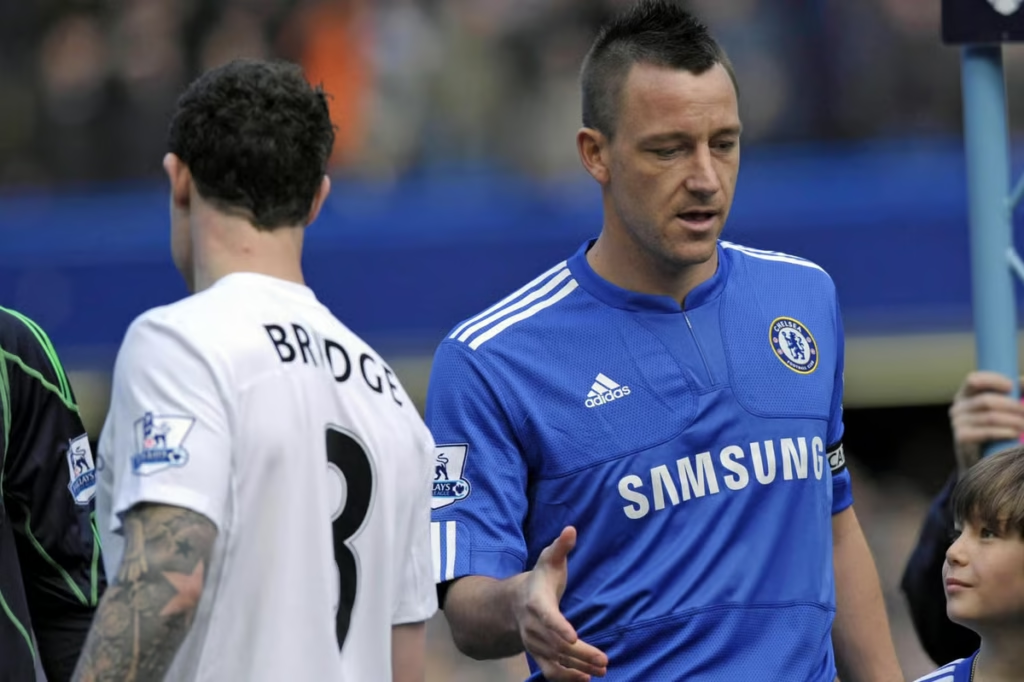
Few football scandals captured public fascination quite like the fallout surrounding John Terry and Wayne Bridge, because the story combined celebrity culture, betrayal, dressing-room politics and public humiliation into one enormous spectacle that tabloids consumed with the appetite of starving animals discovering an open buffet.
The allegations involving Terry and Vanessa Perroncel, the former partner of Bridge, exploded across England partly because Terry was not merely another player but the captain of both club and country, a man whose public image revolved heavily around leadership, loyalty and being football’s loudest ambassador for commitment and togetherness.
Football constantly markets itself around brotherhood and dressing-room unity, although situations like this exposed how quickly those ideas collapse once ego, personal choices and public exposure arrive crashing into professional relationships that were already fragile beneath the surface.
The infamous non-handshake between the two players before a match between Chelsea FC and Manchester City FC became one of the most replayed moments in Premier League history, largely because modern football has perfected the strange ability to transform deeply uncomfortable human situations into endlessly monetised entertainment packages for mass consumption.
The scandal also revealed how football culture often protects powerful figures differently, because performances on the pitch regularly influence how severely people are judged away from it, particularly when trophies and commercial value remain attached to the conversation.
6. Leeds United’s Financial Collapse (Early 2000s)
At the start of the 2000s, Leeds United FC behaved like a club completely convinced future success had already been guaranteed, spending enormous sums on transfers and wages while assuming Champions League income would continue arriving forever like automatic monthly salary payments from the football gods themselves.
The club chased elite status aggressively, assembling talented squads and operating with breathtaking financial risk, although the strategy eventually collapsed once performances dipped and the expected revenue stopped arriving, exposing a structure built on dangerous assumptions rather than sustainable planning.
What followed became one of the most infamous financial implosions English football has ever witnessed, as Leeds sold star players, spiralled deeper into debt and eventually suffered relegation while supporters watched one of England’s biggest clubs transform from Champions League semi-finalists into a cautionary tale about arrogance disguised as ambition.
Football executives often speak about “taking clubs to the next level” while gambling with financial realities they would never tolerate inside their own personal lives, because risking billions of pounds belonging to institutions and supporters somehow sounds visionary until the entire structure collapses and everybody suddenly starts searching for someone else to blame.
The Leeds disaster became especially powerful because it exposed football’s obsession with chasing growth at any cost, a mentality that still exists throughout the sport today, where clubs repeatedly risk long-term stability simply to accelerate short-term success before rivals leave them behind financially.
SEE ALSO | Ronaldo Nazário’s Love Life: Meet His Four Wives Over the Years
5. The British Betting Scandal (1964)
Long before the Premier League transformed football into a global entertainment empire filled with billionaire owners and luxury sponsorships, English football suffered one of its earliest major corruption scandals when players became involved in match-fixing schemes connected to gambling syndicates during the 1960s.
Several professionals, including players connected to clubs such as Sheffield Wednesday and Mansfield Town, were accused of manipulating results for betting purposes, exposing how vulnerable football could become once financial temptation entered dressing rooms containing players who were nowhere near as wealthy as modern stars.
Prison sentences followed, careers collapsed and reputations disappeared almost overnight, while English football discovered that the romantic image of honest professionals playing purely for pride could be shattered surprisingly quickly once gambling money started circulating in vulnerable environments.
What makes the scandal fascinating decades later is how small some of the financial rewards now appear compared to modern football economics, because English football’s integrity suffered enormous damage for sums that today’s academy prospects might casually spend during a weekend shopping trip before posting the receipts online.
The scandal permanently damaged trust because supporters suddenly realised results on the pitch could potentially be manipulated away from public view, introducing suspicion into a sport that survives emotionally. After all, fans desperately want to believe what they are watching remains genuine and unscripted.
4. Manchester City’s Financial Charges (2023 – Present)

Modern football scandals rarely involve trench coats, hidden envelopes or smoky backroom meetings anymore, because contemporary controversy now arrives wrapped inside sponsorship structures, financial regulations and legal documents thick enough to stop small-calibre bullets from passing through them.
Manchester City FC being charged with more than 100 alleged breaches of Premier League financial rules created one of the most explosive controversies the English game has ever faced, triggering endless arguments around financial fairness, state-backed ownership and whether football’s wealthiest clubs effectively operate under entirely different realities from everybody else.
The charges intensified growing frustration among rival supporters who increasingly view modern elite football as a competition where financial power often matters more than sporting tradition, clever recruitment or patient development, particularly when certain ownership groups possess resources that make ordinary club budgets look like supermarket pocket money.
City strongly denies wrongdoing, and the legal process continues, although the broader scandal already exposed how deeply divided football has become regarding money, regulation and competitive balance inside a sport now dominated by ownership structures that sometimes resemble geopolitical investment projects rather than traditional football institutions.
English football once worried about local businessmen overspending recklessly to chase glory, whereas modern football frequently involves sovereign wealth, legal armies and sponsorship arrangements so complicated that ordinary supporters need accounting degrees merely to understand why everybody is shouting at each other again.
Regardless of the eventual outcome, the scandal revealed how modern football’s financial landscape increasingly resembles a battlefield where rules, influence and economic power collide constantly while supporters simply hope their club survives the next decade intact.
SEE ALSO | 10 Football’s Longest Bans in History
3. The Heysel Stadium Disaster (1985)

The European Cup final between Liverpool FC and Juventus FC at Heysel Stadium became one of football’s darkest nights after crowd violence, and panic caused a wall collapse that killed 39 people before the match had even properly begun.
The disaster destroyed English football’s international reputation almost instantly, because years of unchecked hooliganism, poor crowd control and authorities repeatedly underestimating the seriousness of football violence finally exploded before a horrified global audience watching events spiral completely out of control.
English clubs received a five-year ban from European competitions, while Liverpool faced an additional year themselves, punishments reflecting how badly English football had allowed violent fan culture to grow throughout the 1970s and 1980s, while too many people dismissed hooliganism as merely part of the game’s atmosphere rather than a deeply dangerous social problem.
The conditions inside the stadium were catastrophic, exposing failures in organisation, security and infrastructure that contributed heavily to the tragedy, although football institutions spent years beforehand ignoring warning signs because addressing them properly would have required competence, investment and the uncomfortable admission that the sport’s culture had become dangerously toxic.
Heysel forced Europe to view English football differently, not as passionate or romantic but as chaotic and frightening, while supporters across the continent watched a sport supposedly built around joy collapse into panic, death and international disgrace within a matter of minutes.
2. The Adam Johnson Case

The scandal involving former Adam Johnson moved far beyond ordinary football controversy and entered territory that horrified the wider public completely, because the criminal case surrounding sexual activity with an underage girl became one of the most disturbing episodes English football has ever confronted.
While Johnson played for Sunderland AFC, the unfolding investigation generated enormous scrutiny and backlash, particularly once people began questioning how he continued appearing for the club while serious allegations remained active and public concern continued growing louder.
When Johnson eventually pleaded guilty and received a prison sentence in 2016, the reaction across football became furious because many supporters believed football authorities and the club itself had handled the situation with astonishingly poor judgment during critical stages of the process.
The scandal exposed one of football’s ugliest recurring problems, where talent and commercial value sometimes appear capable of delaying moral clarity inside institutions that should already understand the importance of safeguarding, accountability and basic human responsibility without requiring public outrage to force action.
English football often speaks proudly about community values and social responsibility, although scandals like this revealed how uncertain some organisations become once those values threaten to collide directly with contracts, results, financial interests and the fear of damaging their public image prematurely.
The entire case left permanent scars across the sport and forced difficult conversations around player conduct, safeguarding policies and how football institutions respond when criminal investigations involve high-profile individuals earning millions while representing major clubs publicly every week.
SEE ALSO | From Fame to Financial Ruin: Soccer Stars Who Went Bankrupt
1. The Hillsborough Disaster and the Cover-Up Allegations (1989)
Nothing in English football history carries the same combination of tragedy, institutional failure, misinformation and emotional devastation as the Hillsborough disaster, where 97 supporters lost their lives during the FA Cup semi-final between Liverpool FC and Nottingham Forest FC at Hillsborough Stadium.
The overcrowding disaster itself already represented a catastrophic failure in crowd management and stadium safety, although what followed afterwards transformed the tragedy into an even deeper national disgrace as false narratives, misinformation and blame directed toward supporters began spreading through sections of the media and institutional structures almost immediately.
Families spent decades fighting for the truth while facing obstruction, denial and public narratives that attempted to shift responsibility away from authorities and onto ordinary football supporters who had already suffered unimaginable loss, creating one of the most painful chapters modern British sport has ever witnessed.
The scandal surrounding the aftermath became just as important historically as the disaster itself because it exposed how institutions often prioritise protecting reputations over admitting failure, particularly when public accountability threatens careers, authority and political embarrassment on a national scale.
Hillsborough permanently changed English football through stadium reforms and safety improvements introduced after the Taylor Report, although those changes arrived through unbearable human cost that should never have been required before meaningful action finally occurred.
More than anything else, Hillsborough remains the moment English football lost its innocence completely, because it forced the country to confront not only the failures inside the game itself but also the frightening ease with which powerful institutions could manipulate narratives while grieving families struggled desperately to be heard.


